

Rough-Terrain Cranes
Request a Job Quote
Submit a Quote Form and a TNT Sales Representative will be in contact with you as soon as possible.
GET A QUOTECapacities up to 165 Tons
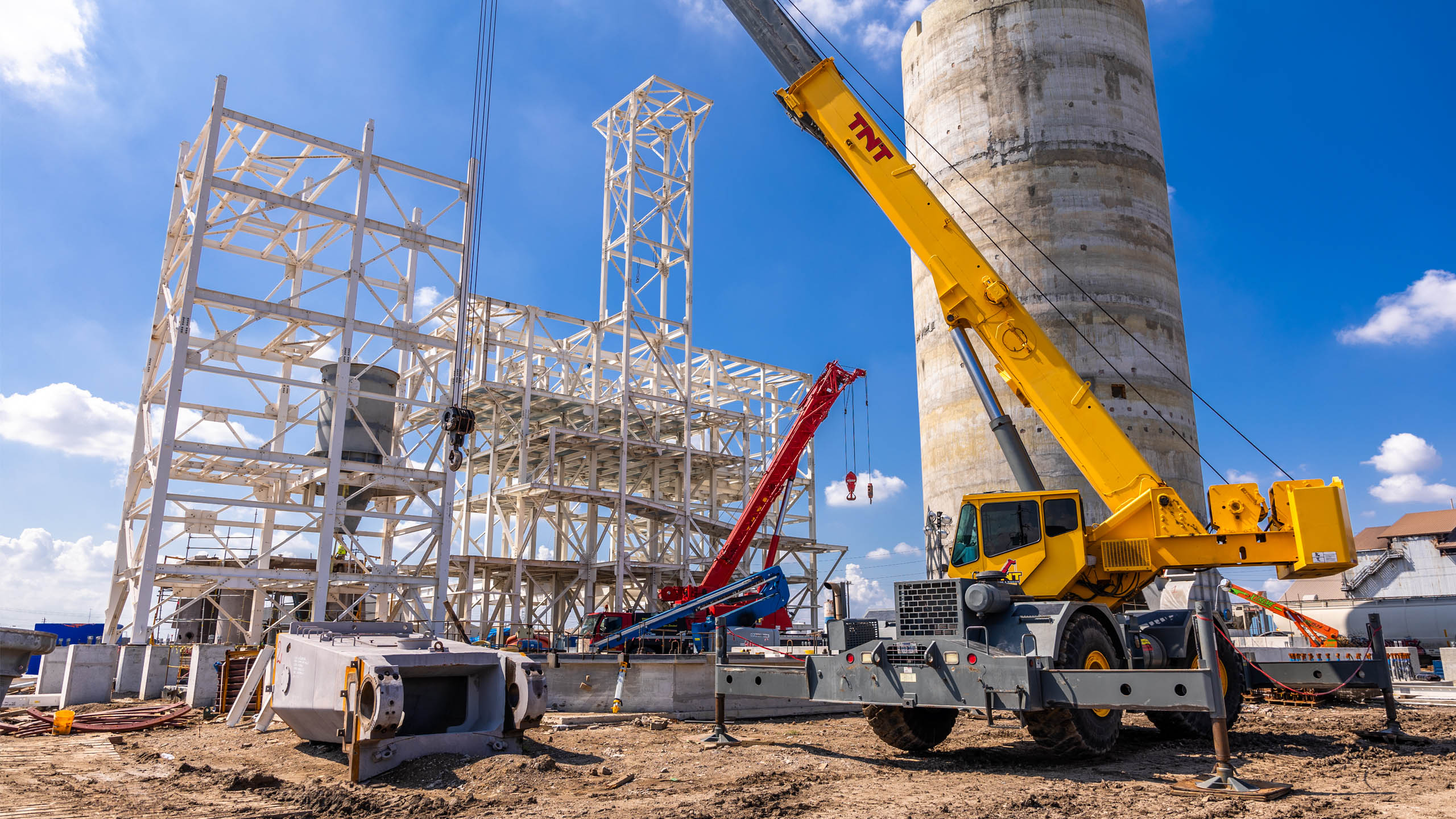
Performance Capabilities
Rough-Terrain Cranes feature a host of advantages over other types of cranes. When compared with Truck Cranes, Rough-Terrain Cranes offer better steering capabilities, traction, and power. They have a lower center of gravity, larger tires for better control, a tighter turn radius for greater maneuverability, and all wheel drive & steering.
Efficient Support Solution
Rough-Terrain Cranes are proven to be an effective support crane option for your project. These machines require minimal mobilization costs, take less time to build, and have the capabilities to take care of all the supporting lifts required with larger cranes.
Maintained & Certified
Our team works hard to keep our late-model fleet of Rough-Terrain Cranes well maintained, certified, and always ready for crane support on your next project.
Browse Crane Library
Technical Specifications | Crane Capabilities | Load Charts
Frequently Asked Questions
What is a rough-terrain crane used for?
Rough-terrain cranes are specifically designed for off-road construction and industrial projects where traditional cranes cannot access or operate efficiently. TNT Crane & Rigging deploys these cranes for structural steel erection, heavy equipment placement, material handling on uneven ground, and infrastructure projects in remote locations where their compact design, large rubber tires, and four-wheel drive system provide superior maneuverability on unpacked soil, muddy conditions, and rocky terrain.
Rough-terrain cranes vs All-terrain cranes?
Rough-terrain cranes feature a single engine, operate from one cab for both driving and lifting, and require transportation via truck or trailer as they cannot travel at highway speeds. All-terrain cranes have dual engines, 6 to 10 axles, and can legally travel on public roads independently, though they are heavier and require more space for setup. TNT Crane & Rigging helps customers select the optimal crane type based on project location, site access, and whether the crane needs to move between multiple job sites.
What lifting capacity do rough-terrain cranes have?
Rough-terrain cranes typically offer lifting capacities ranging from 30 to 165 tons, with actual capacity varying based on boom length, working radius, outrigger extension, ground conditions, and counterweight configuration. TNT Crane & Rigging’s fleet provides various capacity options to match specific project requirements, with telescoping booms extending from 30 to 205 feet and optional jib attachments for additional reach.
Can rough-terrain cranes operate in winter weather?
Rough-terrain cranes can operate in winter weather with proper precautions, though cold temperatures require specific operational adjustments. TNT Crane & Rigging implements cold weather protocols including load capacity reductions of 20 to 25 percent below 15 degrees Fahrenheit, use of cold-weather hydraulic fluids, extended engine warm-up periods, and continuous monitoring of wind speeds and ground stability to address challenges like brittle steel, thickened hydraulic systems, and icy conditions.
How long does rough-terrain crane setup take?
Rough-terrain cranes typically require 30 minutes to 2 hours for setup depending on site conditions and lift complexity. TNT Crane & Rigging’s setup time is influenced by ground preparation needs, boom configuration requirements, outrigger deployment and leveling, and site-specific constraints, with simple lifts on prepared surfaces often ready within 30 to 45 minutes while complex lifts requiring extensive matting or challenging ground conditions may need additional time.
What ground conditions do rough-terrain cranes require?
Rough-terrain cranes require firm, stable ground with adequate bearing capacity, typically 3,000 to 10,000 pounds per square foot depending on crane size and lift parameters. TNT Crane & Rigging conducts thorough ground assessments considering bearing capacity, compaction, moisture content, slope, and potential for settlement, deploying crane mats, steel plates, or engineered cribbing systems when natural ground conditions are insufficient to distribute loads safely.
When should I choose rough-terrain over truck cranes?
Rough-terrain cranes are optimal for projects involving off-road locations with limited paved access, uneven terrain including mud or unpacked soil, confined spaces requiring tight maneuverability, and frequent repositioning within a jobsite. TNT Crane & Rigging recommends truck-mounted or all-terrain cranes when projects require highway travel between distant locations, operation primarily on paved surfaces, or longer boom reach than rough-terrain models offer.
Do rough-terrain cranes require special permits?
Rough-terrain cranes typically do not require oversize or overweight permits when transported on appropriate trailers, as most models can be moved within standard legal dimensions and weight limits. TNT Crane & Rigging handles all transportation logistics, with permit requirements depending on specific crane dimensions, trailer configuration, travel route, and state regulations, and our transportation specialists secure any necessary permits to ensure full compliance with Department of Transportation regulations.
What is the max boom length for rough-terrain cranes?
Rough-terrain cranes feature telescoping boom lengths typically ranging from 30 to 205 feet depending on the specific model, with TNT Crane & Rigging’s fleet offering various options to meet diverse project requirements. Many modern models offer four-section to six-section hydraulic booms that extend efficiently, and optional offsettable jibs can add 30 to 60 feet of additional reach beyond the main boom length.
How much site preparation do rough-terrain cranes need?
Rough-terrain cranes generally require less extensive site preparation than other crane types due to their off-road design. TNT Crane & Rigging’s typical preparation includes verifying adequate access paths, confirming clearances from overhead power lines, ensuring firm ground bearing capacity or placement of crane mats, removing obstacles, and establishing level surfaces, with these cranes often operating on minimally prepared surfaces with strategic outrigger pad placement.